
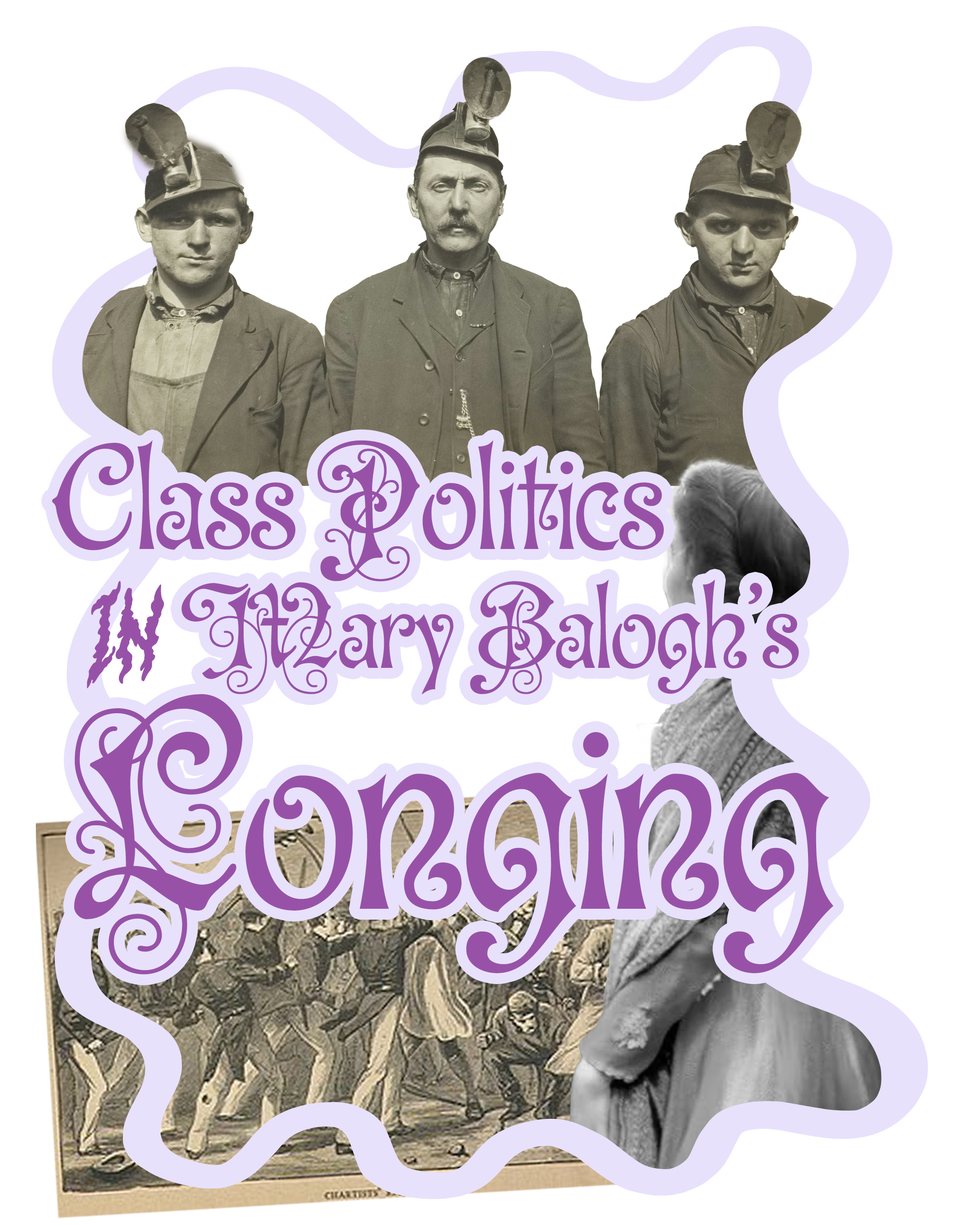
Class Politics in Mary Balogh’s Longing
Picture this: it’s 2018, I’ve got the apartment to myself, and I’ve made myself a party with tea, jam “biscuits”, and a half dozen Mary Balogh books on loan from the library. That afternoon, I read Longing for the first time—and I’m absolutely stunned by its courage.
As a baby historical romance reader, I had never before encountered a book in the genre that centered a working class community or engaged with class politics. It became an immediate favorite and helped me define what kind of historical romances I love most: a book about the meeting of souls between protagonists trying to be on the right side of history.
First published in 1995, Longing is a class-differences historical romance set in Wales in 1839. In many ways, its very existence is an act of rebellion. It centers the Welsh language with a pronunciation guide before the story begins; the heroine works one of the least glamorous jobs I’ve ever encountered in historical romance; and the entire novel takes place in Wales. Purely by taking up space on the bookshelf, Longing brings Welsh class politics into historical romance in a novel way (pun intended). In the years since 2018, it has lived rent-free in my memory as an example of how to write about strikes and protests. I was excited to reread it now in 2026 for this essay. I expected to meditate on how Balogh creates a story that entertains, educates, and provokes the question: How would I behave if my community called for a general strike?
Yet, as you’ll see, the question the text ended up provoking in me is: is Longing as radical as I remember it?
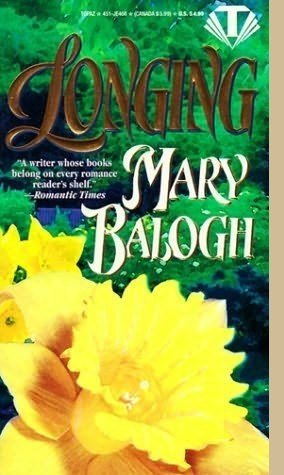
The external plot of Longing pulls from the historical record to reflect the tumultuous class politics of industrial Britain. Alexander Hyatt, Marquess of Craille, owns “a large area of land in one of the valleys of South Wales and the ironworks and coal mine on that land.” After breaking off an engagement in England, he retreats to this inherited property with his six-year-old daughter for a respite. The novel opens on the night of his arrival: he goes for a walk in the hills in the moonlight and stumbles upon a gathering of hundreds of men discussing the Charter, a petition to Parliament for political reform such as the right for every man to vote. Alex is dismayed; he has heard about the Chartists but didn’t think they would be active in Wales. At the end of the meeting, he notices a woman has also been spying on the group. He takes hold of her, kisses her to keep her from screaming, and demands information about who was at the meeting. When she refuses to reveal anything, he lets her go. Thus we meet our heroine, Siân (pronounced “Shahn”) Jones, the illegitimate daughter of an English mine owner and a Welsh coal worker, the widow of a miner, and an educated woman determined to belong to her mother’s uneducated, working-class community.
“the question the text ended up provoking in me is: is Longing as radical as I remember it?”
As the romance unfolds, the town of Cwmbran (pronounced “cum-brawn”) is caught more and more in class warfare. First, the men of the town are pressured to sign the Charter and pay into an Association for further action “in case” the parliamentary petition is unsuccessful. Then, when Alexander agrees with his fellow industrialists to lower wages, the town goes on strike. Finally, when the Charter is rejected by Parliament, the men organize a march to Newport, where they join other Chartists in a demonstration that quickly dissolves into gunshots, arrests, and recrimination.
So far, all of this lines up with my memory of the text as centering class politics alongside the romance. Yet throughout the political drama, our protagonists Alexander and Siân assert their own moral values in ways that surprised me—and which seem to be stand-ins for a 1995-era middle class perspective. From the instant he realizes he has stumbled upon a Chartist meeting, Alex declares himself to the reader an ally: “Alex was quite familiar with the Charter’s demands. He was even sympathetic to them.” Yet the moment the Chartist leader raises his fist in the air to emphasize the statement, “There is power in numbers,” Alex “breaks into a sweat.” This gesture seems violent to him, and the text explicitly links the threat of violence back to the French Revolution; one raised fist in the mountain moonlight is nearly the same to Alex as a guillotine in the middle of Paris forty years before.
Alex does not stop the Chartists from further meetings. As owner of the ironworks and coal mine, he is in fact eager to enact changes, but he forces himself to be patient as he learns the business. He even permits two rounds of wage reductions because he does not yet feel confident he understands the situation well enough. To his mind, the reasonable, rational, and responsible thing to do is to delay—even though it comes at the cost of his workers being unable to pay for basic necessities. He brings this gradualist attitude to politics, too. He wants to make changes locally, he promises the people of Cwmbran, but he warns them away from the march to Newport. Focus on what they can do in their valley, he urges, saying of the reforms demanded by the Charter: “…such changes take a long time. Years or decades. Sometimes even centuries.” Alexander represents the moderate who sympathizes with the working class, upholds the capitalist’s right to earn a profit, and absolutely abhors violence as a means of coercion, rebellion, or change.
“One raised fist in the mountain moonlight is nearly the same to Alex as a guillotine in the middle of Paris forty years before.”
When I first read Longing, I had no particular historical understanding of England or Wales in 1839, and I believed Alex as a naïve landowner who has stumbled upon the responsibility of owning the mines. He holds himself apart from the other Welsh industrialists because he did not mean to invest in this town; he equally holds himself apart from Parliament, which votes down the Charter; he even warns the Chartists that the "authorities” will intervene if they do not stop agitating. On my first read, I accepted this explanation that Alex—like the middle class—does not hold enough power to disrupt the status quo. Rereading it, I understand what a “marquess” means: he was born into political power, and if he isn’t in Parliament, it’s only because he is neglecting that responsibility. He likely is the magistrate of Cwmbran, the very authority he warns against. He has much more power than the text allows him. While I can understand why his English political power was collapsed for the sake of a more streamlined romance novel, it makes his moralizing a little empty. If he really believes in the Charter, he could be arguing for its reforms in Parliament; instead, he tells his workers to wait a century for change.
Siân, meanwhile, straddles worlds, and through her proto-feminist eyes, we see the complex web of factors pushing Cwmbran towards revolt while simultaneously pulling it back from chaos. No one has enough room to live; no one is earning enough to eat. The men spend their paychecks at the pub. Children work in the mines even under legal age. The minister preaches about the nobility of suffering. And her world is steeped in violence, both real and threatened. Throughout this all, Siân agrees that her people deserve reform, yet she shrinks from the idea of any reform that demands unanimous action and especially from reform that requires violence.
“Alexander represents the moderate who sympathizes with the working class, upholds the capitalist’s right to earn a profit, and absolutely abhors violence as a means of coercion, rebellion, or change.”
The first actual violent act in the book is perpetrated by Alex when he grabs Siân after the Chartist meeting and forces a kiss. In his point of view, the kiss is a method of silencing a scream for help. In Siân’s point of view, it is most likely the prelude to rape. This is just the first of many instances in the book where Siân or characters near her talk about the chance of sex being forced upon her, and in this instance as in all the others, Siân brushes the thought away.
Siân displays more anger when describing the coal works as “raping” the town of Cwmbran. It has destroyed the beauty of the valley, and it has polluted the river. The work itself is violent. Siân’s job at the start of the book is to crawl through the mines pulling carts of coal behind her—such brutal work that Alex doesn’t recognize her when she literally bumps into him during an inspection. She mourns an infant she lost from an early birth, confessing to Alex that her labor came too soon because she went back to work in the mine, which she only did because her husband was killed in a cave-in, an omnipresent danger to all the mine workers.
Violence also shows up in her home. Her grandfather regularly threatens to beat her uncle (who is a grown, middle-aged man) for swearing in front of the women. Her fiancé, Owen Parry, openly discusses using physical force to make her obey him after marriage. Though she would really prefer not to be the victim of domestic violence—she is surprised and enamored that Alex says he would never hit his wife—she objects more to the idea that she cannot have her own opinions than to the threatened method of discipline. Violence, then, is embedded in Siân’s life experience, and she does not spend much energy in the book bemoaning it or even identifying it as something she would like to change.
Yet Siân, like Alex, recoils from the threat of political violence from her class. It first comes in the form of the Scotch Cattle, a masked group that whips members of the community for failing to fall in line. Siân’s brother-in-law is punished for refusing to join the Charter Association, earning himself ten whips on the mountainside. Siân does everything in her power to stop the punishment, then to lessen it, and her internal monologue declares the Scotch Cattle, “a scandal and a disgrace.”
When the men organize their march to Newport, Siân is similarly opposed. She knows they are preparing weapons like wooden pikes tipped with iron and predicts it will only lead to violence. Again, she bemoans that they force her brother-in-law to participate, and she protests by insisting on going along herself. When the Newport demonstration does devolve into chaos, the state’s violence against protestors is described with a certain inevitability. Siân mourns Owen Parry, who dies protecting her, but does not spend any time condemning the government for meeting a political demonstration with force.
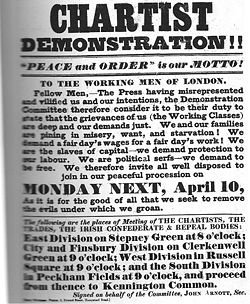
In my memory, Longing is a beautiful story celebrating the working class. While it is absolutely anchored in details of the miners’ lives, it is far from an unapologetic defense of the working class in its struggle for political power. Instead, through Siân’s lens, we get a clear articulation of two middle-class values: every person should have the right to decide for themselves what they think and how they behave, and violence is to be avoided, except for when the powerful need to keep the powerless in line.
In fact, Longing does not present class solidarity as a virtue. For too long, Alex clings to the idea that his fellow industrialists know better and that they must all act together, whether they are reducing wages or changing labor practices. It is only when he breaks solidarity with them that he is able to make reforms welcomed by Siân and Cwmbran.
Similarly, Siân, Alex, and the text condemn the working-class organizers for demanding unanimous solidarity. Alex insists he supports the community’s right to organize around the Charter, but only on the condition that every man must be free to make up their own mind. “…let the Chartists grant that freedom of choice to its followers and to those who choose not to follow,” he says, threatening to pursue the Scotch Cattle to put an end to their bullying.
Though Siân fearlessly critiques Alex’s wealth—refusing to call him “sir” and commenting on how he has 72 rooms in his castle—she is almost senseless with fury each time the Scotch Cattle demands solidarity. When she herself is accused of betraying her class as Alex’s spy by virtue of working as governess in his household, she refuses to give up her position after being threatened by the Scotch Cattle—not as a political statement, but because she refuses to act guilty when she is not. She is dragged up the mountain, tied down, and whipped. Everyone else in her life calls her a fool. Alex says of her commitment to her principles, “I honor you. I deeply honor you.”
“Through Siân’s lens, we get a clear articulation of two middle-class values: every person should have the right to decide for themselves what they think and how they behave, and violence is to be avoided, except for when the powerful need to keep the powerless in line.”
Indeed, perhaps the core romance of the story tells us most what the text thinks of class solidarity. As the illegitimate daughter of an English ironworks owner and a Welsh woman, Siân does not fit entirely in the mining world; Owen Parry often insists she doesn’t belong in the mines. Yet neither is she anywhere near Alexander’s peerage. They both presume marriage is out of the question because of their class differences. It is only when they decide they cannot bear “a lifetime without each other because we were born into different strata” that they find their happily ever after. This could be read as a metaphor for the resolution of class tension by joining the classes together. In the context of everything that has unfolded in Longing, I can’t help but feel instead it is an expression of breaking free from class solidarity to pursue individual happiness.
It is true that the Chartist cause failed to win political reforms. It is true the march to Newport devolved into violence and the leaders were first sentenced to death, then transported to Australia. Yet while the text seems to denounce the Chartist activists as misguided and doomed, its happily ever after is only served by the presence of a “good” industrialist. Siân’s beloved Cwmbran is promised a school, clean water, better housing, pensions, and maybe even safer working conditions, but only because Alex is the one who wields the power—and even then, only because he decided on a whim to check on his Welsh properties. In real history, fairer labor practices, democratic rights, and affordability have only ever been won because activists like the Chartists have dared to demand it –usually with a little bit of violence included, for better or worse.
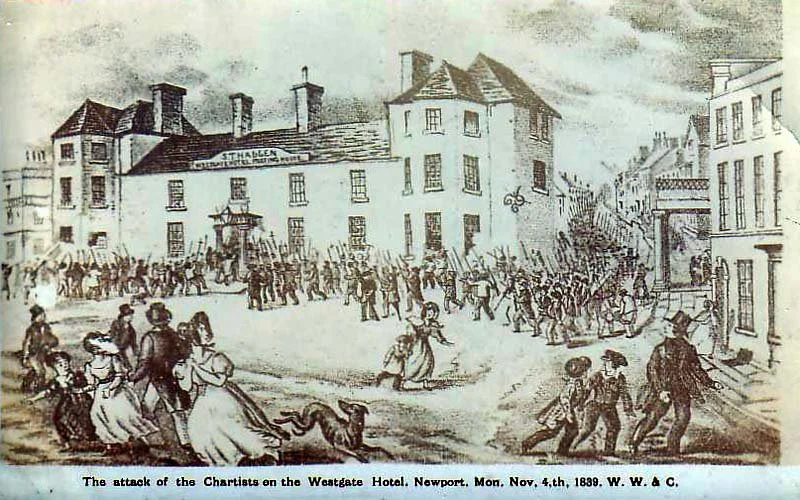
From Wikipedia
In Longing, Mary Balogh dares to spend a whole historical romance novel in a Welsh coal mining town, and that on its own is as radical as I remembered. However, through her class-differences love story, she draws clear moral lines around the issue of political reform: labor exploitation is condemned even by her English nobleman hero, while violent protest and forced class solidarity take the fight too far even for her exploited Welsh heroine. As a reader, I learned about Welsh culture, the Chartist movement, and the nuanced social pressures that can keep both the working and the industrialist classes from advocating for change. Yet I also grew frustrated with the text’s refusal to acknowledge that violence may be necessary for change, no matter how abhorrent we find it. Gradual change that takes decades or centuries comes at a human cost, too.
“In Longing, Mary Balogh dares to spend a whole historical romance novel in a Welsh coal mining town, and that on its own is as radical as I remembered. ”
And so, through rereading this historical romance with its deliciously intense yearning, I came away with both a new love story in my heart and new ideas for how I participate in class dynamics. If I, like Siân, heard there was a demonstration planned to demand political change, would I condemn it for its potential violence? Or would I, like Owen, consider it a worthwhile endeavor and demand everyone participate? Is there any room to be somewhere in the middle?
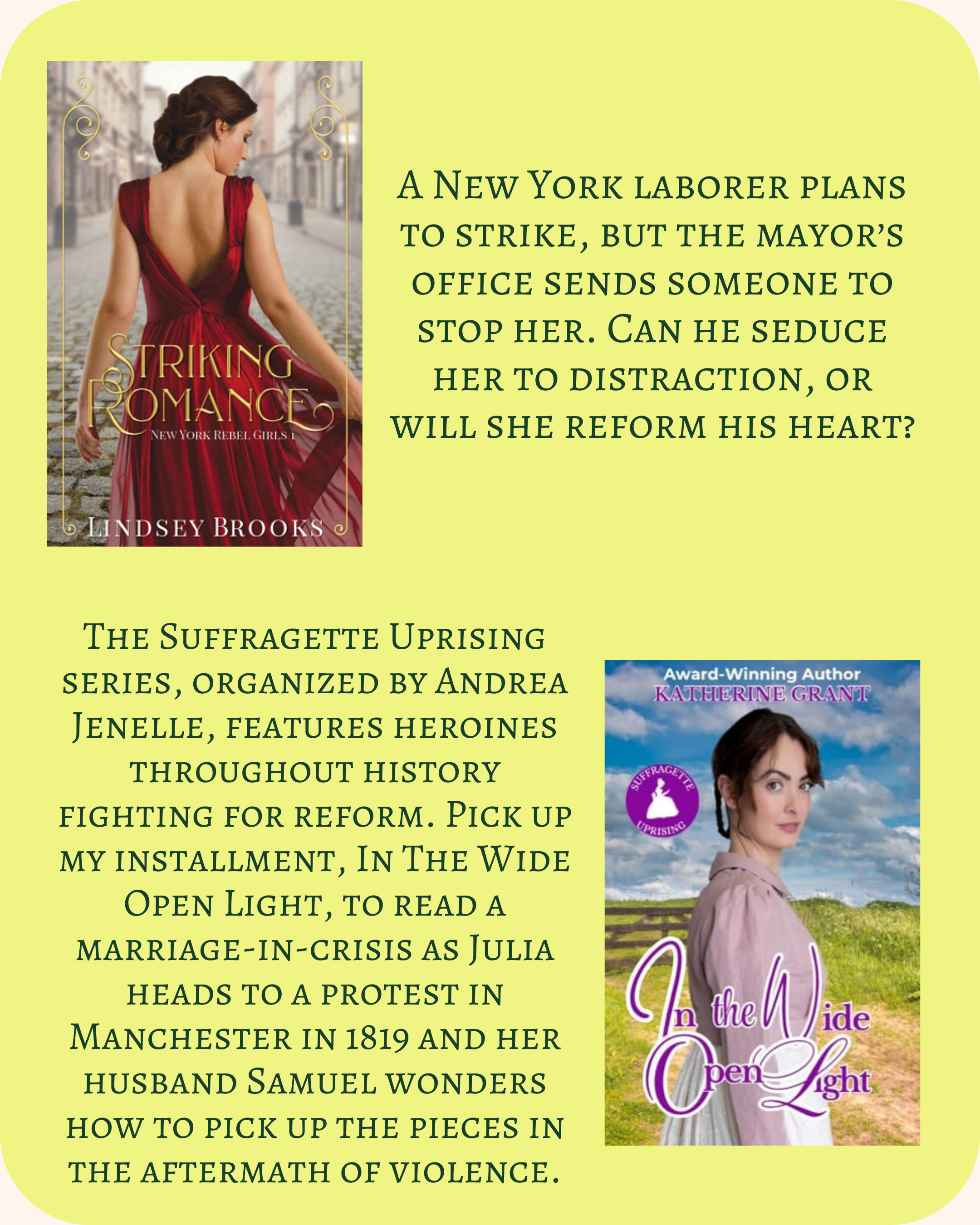
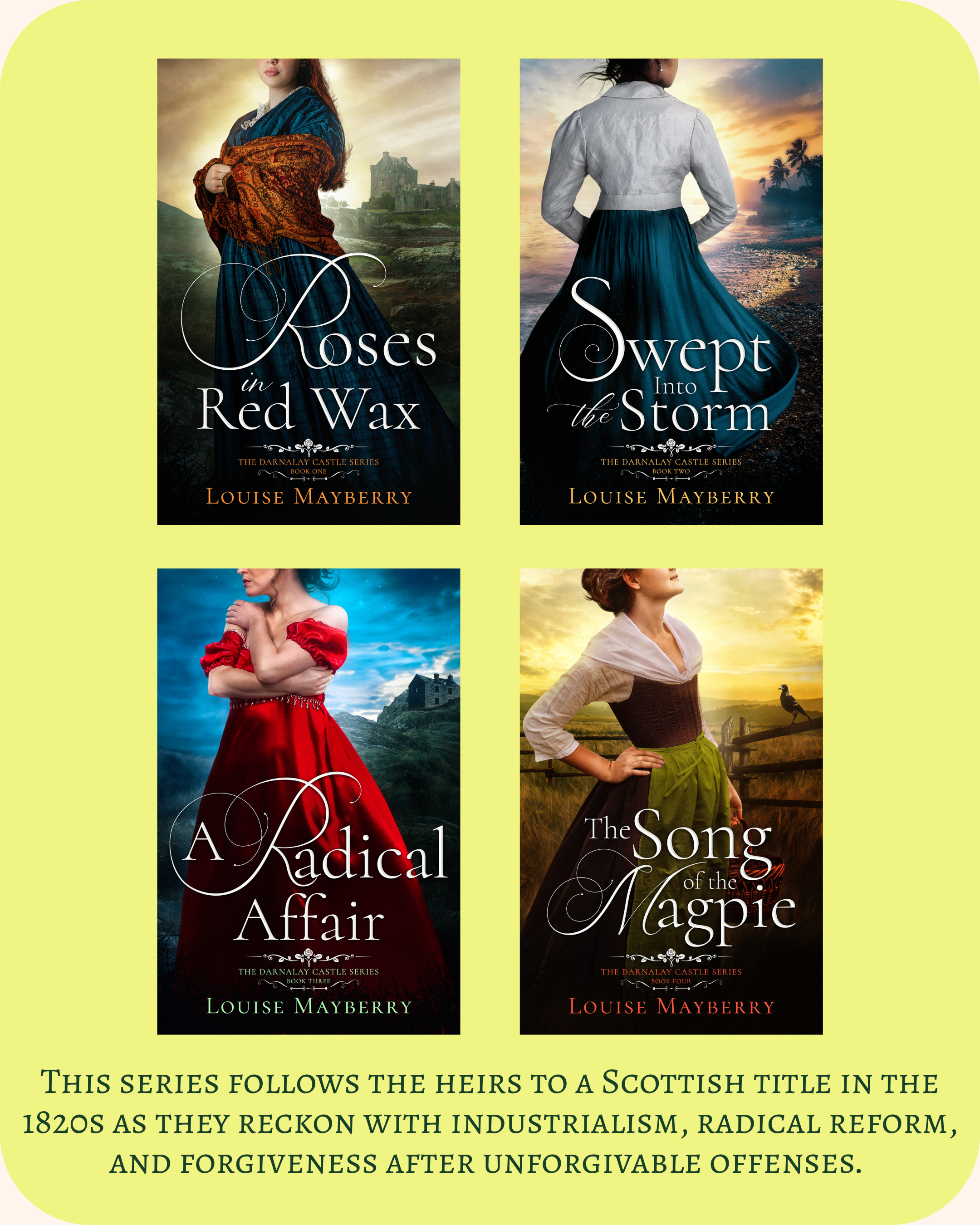
If you’re looking for indie historical romances that consider the role of protest, strikes, or demonstrations, here are my top three recommendations: